
- Home
- Products
- About
- DIY
- Support
- News
- Contact
- EN/CN
-
- From Jefferson to the Modern Workspace: The Evolution of the Standing DeskPublished:2026-09-23 Views:47




In contemporary workspace design, a standing desk is no longer just a table that moves up and down.
From early fixed-height writing stands and manually adjusted mechanical desks to today’s motorized sit-stand systems equipped with smart controls and safety features, the standing desk has undergone a major transformation. Driven by human physiology, technological breakthroughs, and spatial design, its story is a fascinating look into how we work.
1. Early Origins: The Fixed Standing Desk
Standing while working is far from a modern invention.
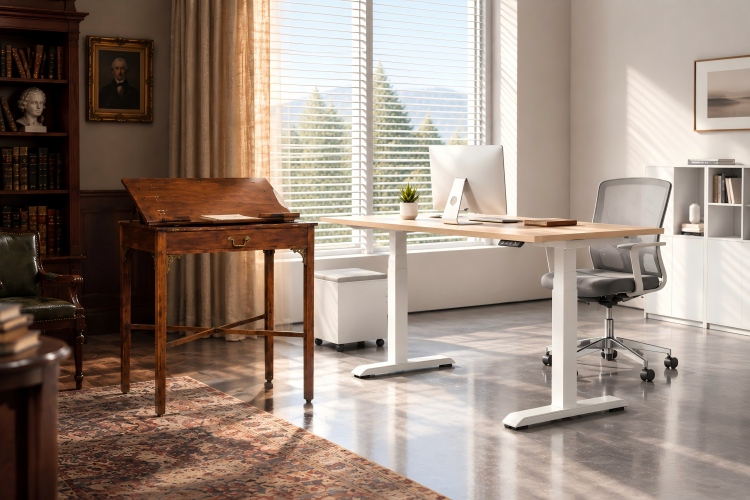
In ancient Greece and Rome, orators delivered speeches from raised podiums with angled tops to read comfortably while standing. Over the following centuries, elevated writing desks gradually found their way into the studies of scholars, authors, artists, and statesmen.
· Thomas Jefferson was one of the earliest prominent Americans documented using a tall, standing writing desk at his Monticello estate.
· Ernest Hemingway famously noted that standing sparked his creative inspiration.
·· Charles Dickens, Winston Churchill, and Leonardo da Vinci were also documented working while standing.
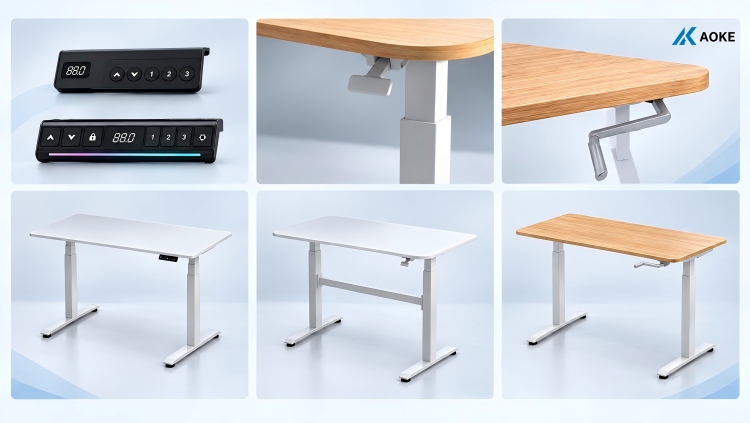
During this era, height adjustments—if available at all—relied on primitive mechanical setups, such as inserting metal pegs into frame slots or turning manual hand cranks to drive gears. While these mechanical desks solved basic height fitting, adjustments were cumbersome and labor-intensive, making switching between sitting and standing during the workday impractical.
Ultimately, what truly propelled the standing desk into the modern era wasn't just the concept of standing itself, but the continuous evolution of height-adjustment technology.
·
2. Drive Technology Evolution: From Manual to Motorized
With the advancements of the Industrial Revolution and mechanical engineering, finding an easy, stable way to adjust desk height became the core focus of standing desk development. By the late 20th and early 21st centuries, growing awareness of the health risks associated with sedentary behavior accelerated ergonomic research. The limitations of traditional fixed-height desks were re-evaluated, triggering a wave of technological innovation.
🔗 Further Reading: <7 Key Benefits of Standing Desks>
2.1 Pneumatic Assistance and Desktop Converters (1884 – Late 20th Century)
In 1891, George W. Johnson patented a foot-pedal-controlled pneumatic cylinder desk mechanism. By integrating gas springs, users could raise and lower desktop surfaces with significantly less physical effort.
Around the same time, desktop converters began gaining traction. Placed on top of traditional fixed desks, these units used mechanical springs or pneumatic lifts to elevate monitors and keyboards. Their main advantage was accessibility: users could experience standing work without replacing their existing office furniture. However, limited surface real estate and lower weight capacities remained key drawbacks.
2.2 The Rise of Motorized Desks (1990s – 2000s)
The integration of electric motor drives revolutionized the standing desk experience, introducing push-button height adjustments. By simply pressing a button or operating a control panel, users could switch working postures effortlessly.
As motor and control technologies matured, modern electric standing desks achieved millimeter-level precision, programmable memory presets, quiet operation, and anti-collision safety mechanisms.
2.3 Linear Actuator Systems: The Core Engine (2010s – Present)
As the standing desk market expanded, multi-motor configurations (such as dual-motor and triple-motor systems) matured, elevating user expectations.
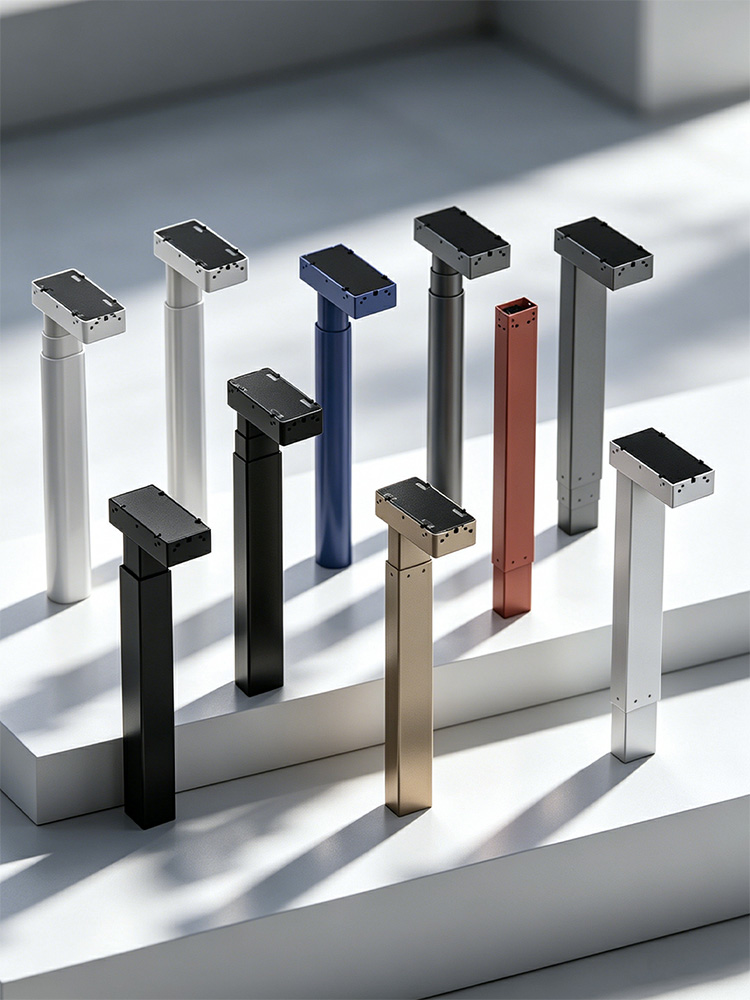
Today, competition centers around the overall performance of the lifting system. As a tech-driven product combining mechanical components, motors, and intelligent controls, a standing desk’s performance is defined by its underlying linear actuator system. This core driver dictates stability, multi-column synchronization, weight capacity, noise levels, and product longevity.
🔗 Further Reading: <Want a deeper dive into linear drive selection? Read: Linear Motion Technology: The Core Power Behind Aoke Standing Desks>
3. Aesthetic and Structural Craftsmanship
Once motorized elevation ceased to be a technical barrier, high-end standing desks began evolving into refined furniture pieces that complement architectural aesthetics.
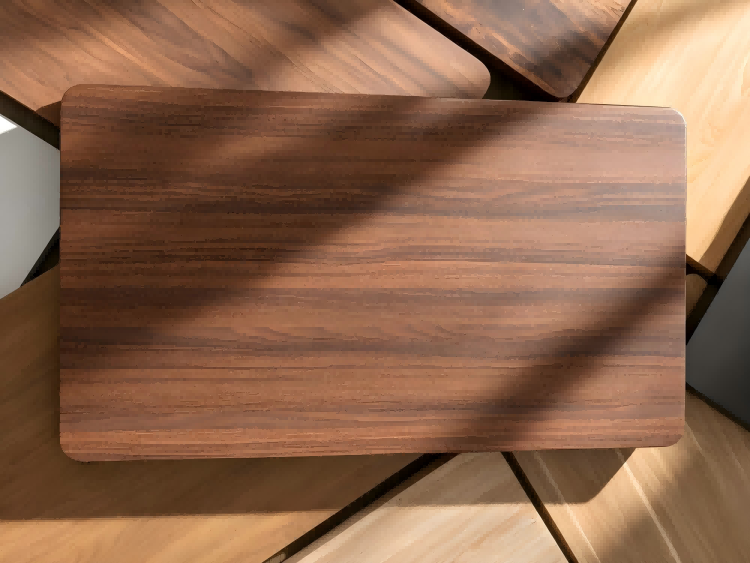
· Premium Materials (Natural Wood Veneers): Moving beyond basic laminate and melamine tops, natural wood veneers (such as oak and walnut) retain real timber grain and tactile warmth, reducing visual fatigue and setting a benchmark for high-end standing desks.
· Structural Innovation (Wood-Framed Edges): Design details have refocused on human-centric ergonomics. For instance, wrapping metallic side legs in painted wooden frames unifies the desk's visual aesthetic, softens hard edges for safety, and helps dampen mechanical micro-vibrations from the motors.
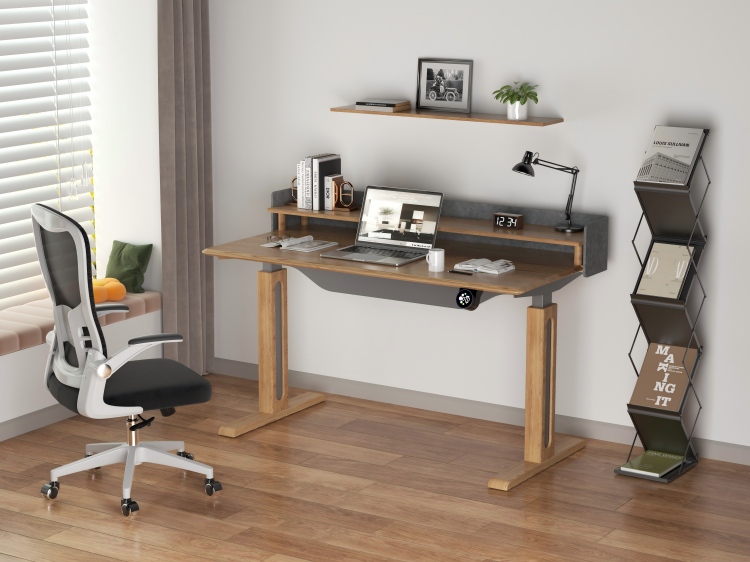
This meticulous attention to detail reflects a core principle of modern commercial furniture design: human-centered functionality. Great design must not only look appealing, but also subtly enhance the user experience in everyday interactions.
4. Spatial Integration: Designing for the Entire Environment
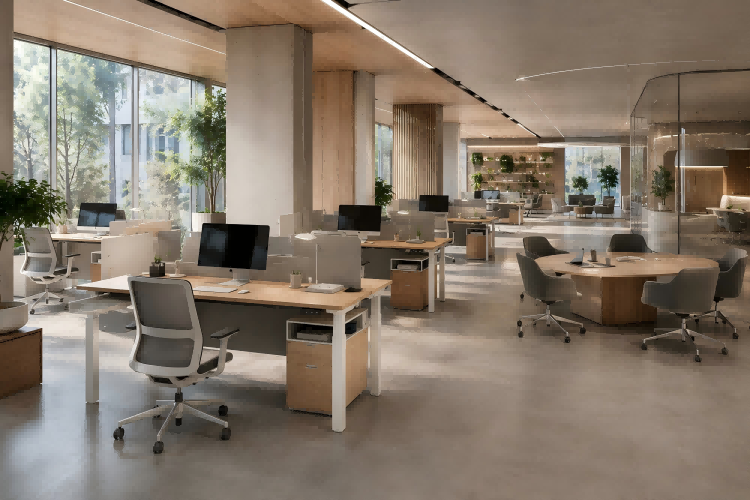
Another major trend in modern height-adjustable furniture is the shift from standalone pieces toward integrated spatial systems.
Designers no longer view height-adjustable desks as isolated products, but as harmonious elements within broader interior architecture.
· Customized Dimensions: Beyond standard single-person workstations, custom sizing options have emerged to fit unique architectural layouts and open-plan offices seamlessly.
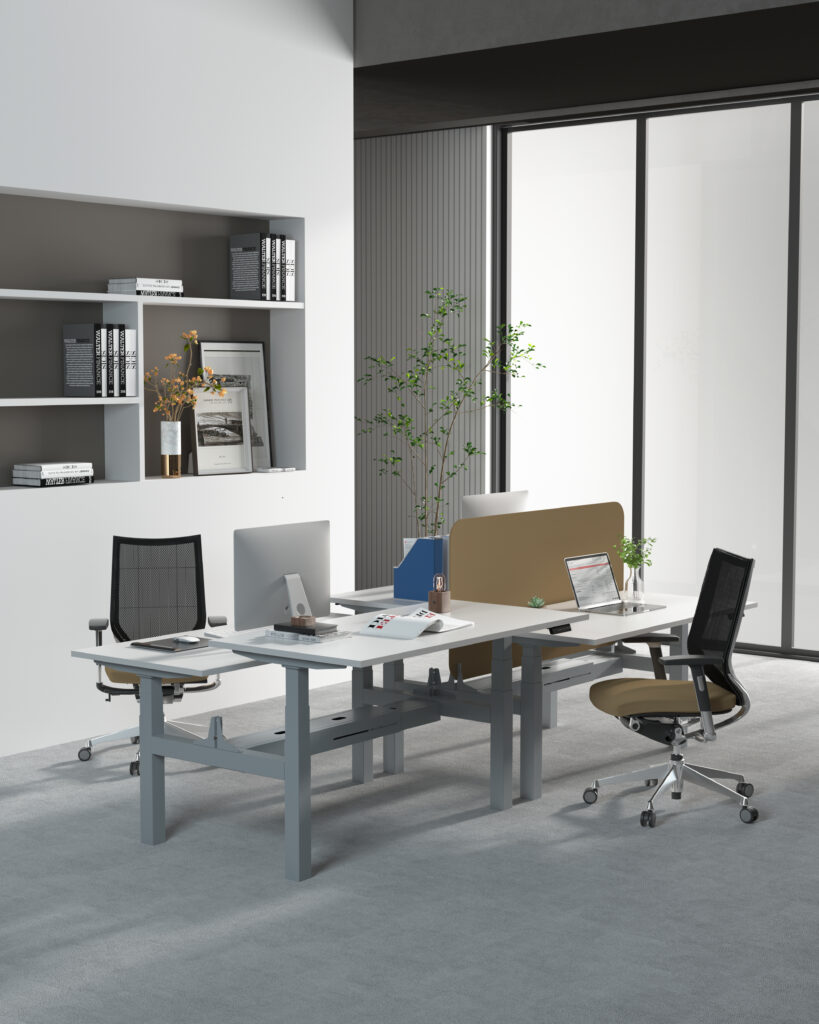
· Unified Aesthetics: Desktop finishes, frame colorways, and design accents are increasingly tailored to match surrounding interior palettes, softening the industrial look of tech equipment and creating warmer, more inviting environments.
· Concealed Cable & Power Management: As part of an integrated workspace system, hidden wire troughs, flush-mounted desktop power modules, and modular grommets keep surfaces tidy and clutter-free.
The evolution of the standing desk has shifted from purely mechanical elevation toward prioritizing ergonomic harmony between people, furniture, and space.
5. The Future: Smarter, Personalized, and Seamlessly Integrated
Looking back at the trajectory of the standing desk reveals a clear path of progression:
Fixed-Height Desks —— Tall Writing Stands —— Manual/Pneumatic Desks —— Motorized Desks —— Smart Workstations
Moving forward, this evolution will continue along three key fronts:
· Smarter Interaction: Moving from simple "command execution" to intuitive, "proactive adaptation."
· Greater Personalization: Transitioning from standardized mass products to tailored, modular solutions.
· Deeper Spatial Integration: Evolving from single furniture items into cohesive workspace architecture.
The Evolution of the Desk Reflects the Evolution of How We Live
From early fixed-height stands to mechanical cranks, pneumatic assists, motor drives, and AI-assisted control systems, the history of the standing desk mirrors our ongoing pursuit of health, efficiency, and flexibility at work.
💡 Buyer's & Ergonomic Guide:
Beyond Price: <What Should You Consider When Choosing a Standing Desk, Besides Price?>
How to Set Up Your Desk Height: <The Ideal Height for a Height-Adjustable Desk>
— The story of the standing desk continues to elevate.
Compare Products 0
No products for comparison
-